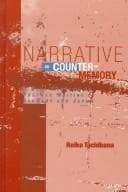
Narrative as counter-memory
a half-century of postwar writing in Germany and Japan
Edición de la obra Narrative as counter-memory
| Autor | Reiko Tachibana |
|---|---|
| Editorial | State University of New York Press |
| Fecha de publicación | 1998 |
| Lugar | New York |
| Idioma | inglés |
| Páginas | 345 |
| ISBN-10 | 0791436632, 0791436640 |
| OCLC | 42855343, 36857597 |
| LCCN | 97016929 |
| Número de Cutter | T117n |
For the first time, this book offers an extensive comparative study of German and Japanese narratives that serve as a form of "counter-memory," in Foucault's phrase, for the two cultures. Rather than attempting to present objective or comprehensive views of history, these narratives draw upon personal memories to offer subjective, selective, and individualistic reports. They provide an alternative (or "counter-memory") to more official versions of World War II and its aftermath. Major writers such as Mishima Yukio, Ibuse Masuji, Oba Minako, Gunter Grass, Uwe Johnson, Christa Wolf, and the Nobel Prize winners Oe Kenzaburo and Heinrich Boll are set in the context of lesser-known writers, including a nine-year-old child, a medical doctor, a woman who served as a journalist, and a former prisoner, to provide a broad cultural basis for understanding responses to the war from within the two societies.